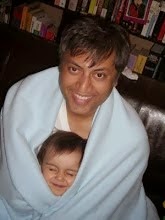
My father, Mansukhbhai Parmar (aka Pankam), passed away on 16th July, 2023 of a sudden cardiac failure. He was, well, a little over 80 years old to the best of our knowledge. Born in a small village called Kareli sometime in the 1940s at home, he did not have his birth recorded and therefore no birth certificate. His official ID card shows him as 80 years old but he was closer to 83 years according to him.
Wednesday, July 19, 2023
DR. MANSUKH PARMAR (194x - 2023)
My father, Mansukhbhai Parmar (aka Pankam), passed away on 16th July, 2023 of a sudden cardiac failure. He was, well, a little over 80 years old to the best of our knowledge. Born in a small village called Kareli sometime in the 1940s at home, he did not have his birth recorded and therefore no birth certificate. His official ID card shows him as 80 years old but he was closer to 83 years according to him.
Friday, December 30, 2022
Friday, September 18, 2020
INDU PARMAR (1943 - 2020)
My mother, Induben Parmar, passed away on 18th September, 2020. She had contracted COVID-19 a couple of weeks ago and had some underlying conditions as well as a pacemaker. She had been hospitalized for over 10 days and in the last couple of days, she had been conscious but not very responsive.
Ma was born in Ahmedabad where she grew up and after getting married, spent the rest of her life in Vadodara. She was gregarious, loving and kind-hearted. Very welcoming by nature and a good cook, she always had wonderful meals prepared for me and many of my friends (who still remember those times). She had a remarkable trait in dealing with adversity. When faced with a difficult situation, she allowed herself to initially cry and grieve over it. But once she got it out of her system, we rarely saw her break down again over that. It seems that she used that mechanism to toughen herself and was almost defiant against the adversity. I hope some of that prevails through the rest of us in the family.
She left behind a heartbroken immediate-family: my father (her companion for over 5 decades), my older sister and me. Her three grandsons will miss the daily exchange of WhatsApp messages. Her only sibling, an older sister, now finds herself all alone without her. The extended network of friends and family will miss having her as the constant presence in Diwalipura.
As I broke the news of her death to him, my father said through tears, "I don't know if I should be sad (that she is gone) or if I should be happy (that she is no longer in pain). But I know I loved her a lot." I don't think I can put it any better. I wish that she could have been around longer but am grateful for her presence as long as it lasted.
She is loved and missed very much.
ॐ शान्तिः शान्तिः शान्तिः
Saturday, March 21, 2020
MARRIAGE STORY
Director: NOAH BAUMBACH
Cast: ADAM DRIVER, SCARLETT JOHANSSON, LAURA DERN, ALAN ALDA
Screenplay: NOAH BAUMBACH
Music: RANDY NEWMAN
Run Time: 137 min.
(2019)
A love story through the lens of a divorce.
Searing yet compassionate.
She really listens when someone is talking, she loves playing with their son, she is amazing at opening jars and she never closes a cabinet.
He is undaunted by setbacks, he is very competitive and energy conscious, he is a great dad and he cries easily at movies.
It serves as a warm and affectionate opening till we realize that this is an exercise mandated by the mediator who is facilitating their divorce. He wants them to recognize why they got together in the first place. However, since Nicole is too embarrassed to share her list, they forego the session.
Charlie is a bright theater director in New York who is trying to move his play to Broadway. Nicole is former teen film actress who stars in his play. They have been married for a decade or so and have an eight year old son, Henry. The couple has had a bumpy ride with some separations in the past that are hinted at. This time it appears to be more serious as Nicole has a pilot to film in L.A. and is taking Henry with her.
They initially agree to not involve lawyers but one of them takes the advice of a well-meaning friend and engages a lawyer, primarily to step back from the situation and seek some resolution. It is not important which one of them went to the lawyer first as it could just as well have been the other. But this invites the ruthless practice of family law and the domestic court system and Baumbach serves up a seething indictment.
Nicole engages a high powered attorney Nora (Laura Dern) to represent her and that leads to Charlie seeking out help, first with an overpowering Jay (Ray Liotta) and then a grandfatherly soul, Bert (Alan Alda) who has one of the best descriptions of divorce with a child involved: It's like a death without a body. How true that is, since there is loss, grief, anger, denial et al. Once the lawyers are involved, it is the end of amicability. Noah Baumbach draws a vivid picture of what two well-meaning reasonable people become during a split. They end up saying and doing things that they never would have thought they could do to the other. Digging up dirt, invading privacy, using a child against the other, they become people they wouldn't recognize. And all this while remaining partners who still care for each other.
That is the thing about divorce (or a split). Even in the absence of malice, it turns two reasonable individuals into bitter rivals trying to get what each thinks is the best outcome for all. In doing so, it becomes less so about what's best for the child they love but more about "winning". This is a point driven home by Baumbach about the lawyers who practice family law. They are always looking for a winner and therefore a loser. It is a ruthless practice that disallows any compassion for the relationship that will continue after the formalities are concluded. It feels that the mediator route was perhaps more empathetic. He starts out by seeking out the good in the relationship and then perhaps would have anchored the break-up on that.
Baumbach is somewhat preoccupied with divorce and it shows up in his work. His earlier film The Squid and the Whale was based on his experience as a child of his parents' divorce. It is said that this film is based on his divorce from Jennifer Jason Leigh and he shows a much steadier hand as a director. He is careful in not picking sides in his narration and leaves it up to the viewers if they choose to be neutral or not. Charlie and Nicole are fundamentally decent, likeable and imperfect as most of our friends are. Surely there are divorces where sides could be taken objectively but this is not a story of every divorce. This is a careful study of a particular divorce and Baumbach is committed to delivering two fully realized characters.
Both Adam Driver and Scarlett Johansson have been good before but this is a new milestone for each one of them. Scarlett Johansson delivers a character that is a far cry from the familiar Black Widow. Her Nicole is not very introspective and analyzes her relationship live as she is narrating it to her lawyer. It is done very naturally and develops a layered character. Driver's Charlie is bright, caring and somewhat self absorbed. Towards the end, he delivers a Sondheim song, Being Alive, at a bar which is very emotional and certainly draws from Charlie's internal turmoil. Apart from the leads, Marriage Story benefits greatly from all the supporting roles, especially Laura Dern and Alan Alda. Driver and Johansson are particularly good in a scene they have in a soulless apartment. It is the kind of fight that partners never think they will have but are unknowingly capable of. One where you say things you never would have expected yourself to say. But as long term partners know, when such things are said, we know where they come from and why they need to be forgiven by each other.
We get to know the Barbers quite well and it is evident that they truly care deeply for each other but just can't be together any longer. By the end, one hopes that they find happiness in the aftermath of the divorce. The ending seems to suggest so and that is satisfying. This is a thought provoking film and I would recommend partners in a long term relationship to watch it... perhaps not together.
"Criminal lawyers see bad people at their best, divorce lawyers see good people at their worst."
Saturday, February 11, 2017
LA LA LAND
Director: Damien Chazelle
Cast: Ryan Gosling, Emma Stone
Screenplay: Damien Chazelle
Music: Justin Hurwitz
Run Time: 128 min.
(2016)
A splendid revival of old-school musicals.
It takes all of 30 seconds for La La Land to establish its identity: an unabashed musical from an era almost forgotten. It proudly embraces the escape from reality as it promptly breaks into song-and-dance routines that punctuate an age old story.
The movie begins with our two leads Sebastian (Ryan Gosling) and Mia (Emma Stone) stuck in traffic on the LA freeway in summer. The crowds stuck in traffic break out into a song and dance but our leads are not a part of it. This sets the tone for the rest of the film where we will witness flights of fantasy which aid the main story.
Sebastian is a jazz musician, a purist who dreams of opening his own club and doesn’t want to sell out. Emma is an aspiring actress who is tired of waiting for audition calls which are few and call-backs which are fewer still. She works as a waitress in a coffee shop on the Warner Brothers studio lot while he plays popular tunes at a night club secretly trying to weave in his own compositions. They are both passionate artists chasing a dream that is within sight but out of reach.
It is not love at first sight but rather a couple of misses before it clicks. And once it does, the two lovers inspire each other to pursue their dreams. Mia starts writing her own play and Sebastian takes up a gig with a friend’s band. But this is where the rubber meets the road: success demands commitment that can take a toll on romance.
Chazelle uses seasons as markers for different chapters or segments in the film. We begin with Winter and cycle through seasons throughout. Since this is set in LA where the change is seasons is not very dramatic, Chazelle uses an innovative way of depicting this by his use of colors. Characters wear certain colors to add a little emphasis to the storytelling. (For example, Mia and her actress friends donning primary colors complementing each other.) Chazelle’s use of darkening the screen to focus on a character and transitioning to another sequence works beautifully.
With a record number of Oscar nominations, the film is certainly not going unnoticed but I would be remiss in not recommending this on the big screen. Filmed in CinemaScope with an aspect ratio of 2.55:1, it is intended to be viewed on a majestic widescreen it deserves. This is certainly worthy of being called the picture of the year.
Here's to the ones who dream
Foolish, as they may seem
Here's to the hearts that ache
Here's to the mess we make
- Mia (audition)
Sunday, November 27, 2016
MANCHESTER BY THE SEA
Director: KENNETH LONERGAN
Cast: Casey Affleck, Michelle Williams, Kyle CHANDLER, LUCAS HEDGES
Screenplay: KENNETH LONERGAN
Music: LESLEY BARBER
Run Time: 137 min.
(2016)
About grief and loss… yet funny.
Saturday, September 3, 2016
WHIPLASH
Director: DAMIEN CHAZELLE
Cast: MILES TELLER, J. K. SIMMONS, Paul Reiser
Screenplay: DAMIEN CHAZELLE
Music: JUSTIN HURWITZ
Run Time: 107 min.
(2014)
Does not rush, does not drag.
Terence Fletcher (J. K. Simmons) is a conductor/teacher at the school and is legendary for his teaching talents as much as his terrifying instruction methods. Fletcher is a complex man whose obsession with excellence is paired with dubious motivations. His justification for his approach is captured in one of his lines:
Terence Fletcher: I was there to push people beyond what's expected of them. I believe that's an absolute necessity.
The premise is an age old standby: a young talent is pushed to achieve its full potential by a teacher. There is nothing novel in that aspect of the narrative but mind you, this is not Dead Poets’ Society or To Sir With Love. In fact, the closest thing to Fletcher in cinema history is the drill sergeant from Full Metal Jacket. The story is not focused on finding a common ground for the two leads and establishing a lifelong bond. The script is far more uncompromising than any of its predecessors in this storyline. The writer and director, Damien Chazelle, is not the least bit interested in getting his audience to cheer and applaud at a cinematic outcome.This is about two individuals obsessed with their pursuit of excellence and Chazelle offers a film that makes you pause and think about it long after you’ve left the theater. Is it an acceptable approach to tutor someone to excellence if it means withholding all praise and only offering criticism in the harshest form?
Fletcher comes across Andrew one night as he is practicing in the school. He berates Andrew somewhat but the next day Andrew finds himself on Fletcher’s band as one of two competing for the core drummer spot. As the band practices to win a jazz competition looming on the horizon, Andrew gets a taste of Fletchers brutish and abusive teaching style. The movie plays out like a thriller, keeping you at the edge of your seat, largely due to the tightly-paced directing style adopted by Chazelle.
There is an unhealthy relationship that develops between the two. While Fletcher is unforgiving in his demands out of Andrew’s performance, Andrew’s drive to create his legacy is equally unforgiving on himself. The question is whether this combination will spiral into descent or intensify into greatness. In most films, the competition would be the culmination point but Chazelle sees it as a mere road stop in a broader story.
The whole story is told from Andrew’s point of view and Chazelle develops the character quite well by adding perspectives from his father (played subtly by Paul Reiser), extended family and his girlfriend. Chazelle makes it a point to emphasize that Andrew, while likeable, is not perfect. It balances out what could have been a one-dimensional character.
The film relies solely on the two lead performances and boy, do they deliver! These are two landmark turns by Simmons and Teller. Miles Teller portrays Andrew in a raw and visceral manner, completely immersing himself in a character desperately seeking to achieve greatness. J. K. Simmons’ performance is more nuanced and complex as he presents a character that has layers of excellence, malice and charm among others. It is a credit to his portrayal that the character is elevated from being a stereotypical antagonist to a complex yet flawed one. (Simmons went on to receive the Oscar for this role.)
Jazz references to music and music greats are scattered all over the movie. The music is the backdrop of the story and is ever present. The title track “Whiplash” and “Caravan” get top billing and several drum solos in practice and performances get the spotlight as well. Teller has been playing the drums since he was 15 and it certainly helps in bringing some authenticity to the role.
The ending could have been more traditional in seeking closure but Chazelle chooses to leave it open to interpretation. I think it works better because it leads to discussions that a good film should aim for. In this case, it raises a debate about the price of greatness: How far is too far? How much is too much? Is it worth it? The answer is perhaps less important than the discussion and awareness.
Sunday, December 28, 2014
THE SPECTACULAR NOW
Director: JAMES PONSOLDT
Cast: MILES TELLER, SHAILENE WOODLEY
Screenplay: SCOTT NEUSTADER & MICHAEL H. WEBER; TIM THARP (novel)
Music: ROB SIMONSEN
Run Time: 95 min.
(2013)
Not your average teenage rom-com.
We meet Sutter as he is filling out his college application form and reflecting on his life. His girlfriend has recently broken up wiith him and he is out drinking. He ends up passed out on a front lawn and is found by Amy Finecky who is out on a paper route. Amy is his classmate but Sutter has not been aware of her existence so far. As he accompanies Aimee on the rest of her route, an interesting relationship begins.
Aimee is a bright and ambitious wallflower who is beyond happy to be noticed by someone like Sutter. Sutter sees Aimee as a platonic “project” at first but cannot help himself being romantically drawn to her. There is a spontaneous and unexpected compatibility in their relationship. They challenge each other to achieve greater heights not because they are blinded by love but because each sees the spark and potential in the other. They both come from
Sutter’s relationship with his mother is tense and he looks up to his perception of his father who has been absent for most of his life. After meeting Aimee, Sutter happens to find out his father’s whereabouts and they set out on a road trip to visit him. The encounter marks a significant turn not only in Sutter’s coming of age but also in his relationship with Aimee. The script does a terrific job of depicting the growth of both characters in a real, believable manner. It allows for their flaws without affecting the likeability of the two leads. Neustader and Weber prove that (500) Days of Summer was not a fluke.
The two leads are perfectly cast. Miles Teller shines as Sutter, making a character with serious flaws extremely likeable. This is crucial to the success of the film as it is narrated from Sutter’s perspective. Teller reminds me a little bit of John Cusack from Say Anything. Shailene Woodley is very credible as the girl-next-door who blossoms into a beautiful and assertive young lady. This is not the case of your typical rom-com makeovers where the ugly duckling turns into a beautiful swan. The physical changes are subtle but transformation is more in her demeanor as she discovers her confidence and strength.
Director James Ponsoldt does a fine job of keeping the focus on his two leads and not letting the film meander. The secondary characters in the script are portrayed with enough care to make them believable as well as add color to the lead character's personality. Sutter’s ex-girlfriend, her new beau, Sutter’s family (sister and parents) as well as his boss who owns the shop where he works: all these characters are well, if not fully, drawn and don’t fit the stereotypical mold of this genre. His ex-girfriend's character would be made into a caricature in most other rom-coms but here she provides another perspective on Sutter which is reasonable. The following example of an exchange between Sutter and his boss, Dan, reveals a lot about both in a just couple of lines:
Dan: If I was your father, this is where i might give you a lecture or something, you know, about what you're doing to yourself.
Sutter: You know what Dan, if you were my Dad, you wouldn't have to.
The final half hour or so of the film clearly moves away from a lighter mood to a definitely darker tone. But that is remaining honest to the evolution of the lead characters' lives rather than sugar coating it. Some might say that the ending is perhaps a little "Hollywood" but it provides hope for the characters that we have become fond of. Also it might be the end of a chapter rather than the whole story so I don't consider it a cop-out. This is clearly one of the better young-adult films out there and well worth your time.
Tuesday, March 25, 2014
PET PEEVES
I suppose I belong to a thinning, if not dying, breed. For some reason, I have always been drawn to grammatical inaccuracies and can't shake off this urge to reach out and fix these errors. Be it a small yet misplaced apostrophe in a supermarket sign (viz. Potato's) or a glaring mistake on a huge billboard (viz. Got milk?), it tends to pop out of the background and stare at me. I have even found a misuse in a printed book with over a million copies sold. As a means of catharsis, I have decided to list some of the major ones that have scarred my inner self and continue to lash out in this digital age as grammar loses even more ground with the next generation.
A few years ago, a friend of mine had made the following announcement on a social media site which, as a stickler, made me chuckle.
The improper use of lay was even more pronounced in the context of Easter as it makes one think of eggs. I am sure that my friend had a great time "lying" on the beach but laying (which implies working) would perhaps not be that deserving of a proclamation.
This misuse of lay is widely prevalent and to some extent is understandable. The trouble lies (pun intended) with the two meanings of lie, one being repose or resting flat while the other meaning of not telling the truth. The second meaning has obvious negative connotations and causes people to avoid using it in a context where they are not being untruthful. This is further complicated because "lying" as an adjective implies not telling the truth e.g. "that lying criminal", but as a verb it can mean resting flat as well as not telling the truth. This double meaning has confused people and as a result, driven the misuse of "lay" in its place. I cannot tell you how many times I have cringed as my mother in law repeatedly instructed her dog to "lay down". (A helpful rule of thumb to remember is that "lay" is the past tense of "lie". This helps with the correct usage.)
It hasn't helped that some of the misuses have crept into popular culture via songs such as Bob Dylan's "Lay Lady Lay" (a personal favorite; damn you, Dylan!) and Eric Clapton's "Lay Down Sally". I wonder how they would have worked with "Lie Lady Lie" and "Lie Down Sally".
Couldn't care less
This is one of the more common misused phrases out there. You will hear the following quite often: "I could care less if ... ". I have heard this from colleagues, friends, people in cafes, radio hosts, etc. The intent here is to express a total lack of interest in someone or something. But when one says "I could care less", it raises the obvious question: why don't you care less? By saying "I couldn't care less" one is implying that the topic is at the bottom of one's priority list and then the phrase carries some weight.
Unfortunately in today's fast-paced world, people do not pause to think through the words they have uttered and this misuse continues to be thrown around loosely. In the digital age of texting, the correct usage is made even more difficult because you have to use the dreaded apostrophe (which is not always on the virtual keyboard screen). Hopefully there will always be some sticklers out there who will preserve the correct usage.
Momentarily
Here is an example of a misused word being accepted as an alternative in the dictionary. Almost every flight I have taken has had an announcement stating, "...we will be landing momentarily..." to let us know that we will be landing in a few minutes. The original meaning of the word is "for a moment or brief period" but over the years, the wide use of the same word to imply "in a moment" has led to the inclusion of this second meaning in the dictionary. In American English, the word is used more often to imply "in a moment". However, in British English, it is predominantly used to imply "for a moment". Obviously, this has led to many Brits panicking when they hear the landing announcement on a US flight!
I prefer to use the dual meaning to my advantage and often respond to requests with a sly response, "I will address it momentarily."
Your vs. you're
A while back, I received from someone I reported to an email which read as follows:
"Your going to love this!"
This predates email availability on mobile devices so I knew that it was typed on a conventional keyboard with no auto-correction feature included. It was also not the first time I had seen such usage from that person. Unfortunately I had to choose between laziness and ignorance on the person's part, neither of which was encouraging.
In this day and age, this misuse is so rampant that it is at risk of being accepted as the norm. I understand that there is extra effort required in finding the apostrophe key on the virtual keyboard but one can always skip the contraction and just use "you are". Are we really getting so lazy that we cannot be bothered with typing in an extra keystroke? In my mind it is pretty simple: if one is trying to say "you are" then it can be contracted to "you're" but otherwise there is no need to use it elsewhere.
Its vs. it's
This is another one that causes confusion for some people but is very similar to the logic applied above. If one is trying to say "it is" or "it has" then this can be contracted to "it's" but otherwise leave "its" be.
"It's been a very rough winter in Philadelphia, most snowy in its history."
The dreaded apostrophe s
How often have you come across something similar to the examples below?
Signs for sale such as "Potato's 80 cents/lb" or "DVD's for sale"
Memos addressed as "To: VP's and GM's"
Signs in public spaces such as "Taxi's & Buses"
The use of an apostrophe to denote a plural sense has been so widespread that it is generally accepted as appropriate. Partly this is more prevalent due to some older style books that recommended using an apostrophe to pluralize abbreviations. However this is no longer the case and style books over the past 50 years or so have clarified this. The use of an apostrophe is to indicate possession (e.g. John's car) or a contraction (e.g. You're correct.) but not to indicate a plural sense. There is a link to some funny but useful grammar posters at the end of this post which has a pretty concise one for apostrophes.
And if you are feeling a little protective about the much abused apostrophe, here is a forum for you: Apostrophe Protection Society.
Between you and I
This is perhaps one of the most common infractions in today's communication. Somehow it has become a sign of sophistication to include "I" instead of "me" in one's sentences, regardless of the usage being incorrect. I am sure that it stems from a recognition of the early misuse of "me" in place of "I" such as the response to "Who is it?" generally being "It's me." Once grammar teachers started chiding students for the misuse and correcting them with the proper response of "It is I," people have started to consider all usages of "me" as incorrect and have adopted the usage of "I" as a permanent replacement. What's unique about this violation is that it is more prevalent amongst the upper ranks of today's workforce. You will find this misuse more in the management level and amongst the C-suite (CEO, CFO, etc.) inhabitants.
It is helpful to remember that "I" is a subject while "me" is an object. This means that when one uses a preposition (like with or from or between) it must be followed by an object pronoun like me or him.
Another way to check is by taking a sentence and deconstructing it (meaning breaking it into multiple simple sentences) to see if it makes sense. Consider these two examples:
Sentence: "He and I went to the park."
Deconstruction: "He went to the park." and "I went to the park."
Sentence: "John went to the market with Jane and me."
Deconstruction: "John went to the market with Jane." and "John went to the market with me."
Try the second sentence with "Jane and I" and you will see how it doesn't make sense. At the end of the day, just let go of the fear of using "me" and include it in your language as you see fit.
Why pay attention to these?
One is quite aware of the old adage about substance over style in one's message. However, it is important to keep in mind that form enhances function and sometimes improper form can lead to misinterpretation of the message. The focus of style is to keep the sentence elegant and free of ambiguity.
Much as I accept that the spoken language is a constantly evolving element, I would like to preserve the original intent behind some of the language. It is said that 15 to 20 years of an incorrect usage can lead to inclusion in common parlance and dictionaries. While it is our responsibility to enhance and develop the tools of communication, I believe we also carry some obligation to maintain and preserve the original language.
[While we are on this topic, there are several other misuses that come to mind but I am not aiming at creating an exhaustive list. I have also noticed confusion on the following ones:
Further vs. farther (farther is used to indicate physical distance)
affect vs. effect (verb vs. noun)
advice vs. advise (verb vs. noun)
principle vs principal (principal is main, think school principal)
bad vs. badly (especially when used with "feel")
You will have your own pet peeves that may or may not include the ones that bug me.]
Some Resources:
eLearnEnglishLanguage.com
Grammar pack posters - http://shop.theoatmeal.com/
Friday, February 21, 2014
BEFORE MIDNIGHT
Director: RICHARD LINKLATER
Cast: ETHAN HAWKE, JULIE DELPY
Screenplay: RICHARD LINKLATER, ETHAN HAWKE & JULIE DELPY
Music: GRAHAM REYNOLDS
Run Time: 109 min.
(2013)
What started out as an experimental stand-alone film has now turned into a trilogy (and hopefully more). We first met Celine and Jesse on their promising first date in Vienna (Before Sunrise) and then revisited the duo nine years later in Paris (Before Sunset). It has since been another nine years. But this time, unlike the past interval, they have spent the last nine years together instead of apart. The couple now lives in Paris, has twin daughters and is on a Greek island vacationing at a friend's place. Jesse is an established writer who has been invited by an older author to visit the southern Peloponnese island. Celine continues to work as an activist but is considering a new position.
The third and final chapter is more reminiscent of the previous two films albeit much darker and heavier in tone. Jesse and Celine have been gifted a night's stay in one of the hotels on the island. They take a walk to the hotel through the town and begin a conversation about their relationship. This is not a newly-wed couple or early-in-the-relationship lovers being flirtatious or tender with each other. This is a seasoned couple comfortable with pulling no punches and being emotionally honest. The discussion continues once they check in and get to their room. The scene in the room is the cornerstone of the film as their conversation takes a turn for the worse and turns into a fight. The beauty of this scene is that the way the argument begins and turns into a fight (and ends) is so natural and realistic that we can identify with it completely. Most married (or long-term) partners have lived through this fight and will admit that it is very difficult to pinpoint when the fight started.
The two leads have established their chemistry in the previous films and have grown into their roles, with clear input on the script which was developed in a workshop style. Delpy has aged a little since the last outing but retains her radiance. Hawke on the other hand appears to be showing the passage of time on his face a little bit more obviously. However Hawke's Jesse seems have a better grasp on his convictions and perspective after 18 years. Linklater provides insights into the characters via casual introspection. For example, Jesse muses about the time when he called his dad upon his grandmother’s death and blurted out: “Hey Dad, you’re an orphan now!”. He admits that it was not what he meant to say at the time but it reveals a bit about his personality and mindset.
The third installment does not mark the beginning of the end but is more of a testament to the maturity of the relationship. This comes with a tinge of bitterness along with all the good that accompanies it. The first film was about romantic beginnings and the sequel was about second chances. This one is about reality, both good and not-so-good. We happen to catch Jesse and Celine on a night when they have a fight but that does not define their relationship just as their previous encounters did not guarantee a fairytale lifetime. One of Jesse's comments sums it up nicely: "But if you want true love, then this is it. This is real life. It's not perfect, but it's real."
It would have been easy to create a romanticized coda and tie the trilogy in a nice bow. But Linklater is not one to cheat either himself, the characters or the audience. He is bold enough to present "happily ever after" for what it is in life: a fantasy. Which is why we hope that he and his collaborators will endeavor to provide at least one more glimpse into Jesse and Celine's life a few years down the road.
Monday, January 6, 2014
BEFORE SUNSET
Director: RICHARD LINKLATER
Cast: ETHAN HAWKE, JULIE DELPY
Screenplay: RICHARD LINKLATER, ETHAN HAWKE & JULIE DELPY
Music: FRED FRITH
Run Time: 80 min.
(2004)
Boy meets girl, again. Nine years later.
It is not often that one gets a chance to revisit likeable characters from a film which is not an obvious candidate for a sequel. Before Sunrise presented us with Celine and Jesse, a pair of smart twenty-somethings that made an impression on the audiences. The movie was a moderate success on the big screen but not enough to motivate a sequel for monetary gains. The former was almost an experiment trying to break from the conventional mold of romantic films. It follows an American boy and a French girl through the streets of Vienna on the night they first meet. They part ways at the end with a promise to meet after 6 months in the same place.
Before Sunset places us about nine years into the future from that point; this time in Paris. On a summer afternoon, Jesse is promoting a book he has written about the fateful night in Vienna. As he is discussing the book and taking questions at a famous literary landmark (Shakespeare and Company) in Paris, he notices a familiar face in the back. It is Celine who read about his appearance and came by to meet him. He has a flight to catch in a couple of hours and the movie slips into real time as the two try to catch up on the past decade of their lives.
Jesse is in a failing marriage and has a young son to whom he wants to provide a role model. Celine is an idealistic activist working for a cause she believes in but appears to be a bit jaded. The conversation begins with a bit of expected awkwardness but they quickly settle into a smooth flow, quietly reiterating the compatibility they share. There are the obvious questions that need to be answered: what happened in Vienna 6 months after they parted? Did one of them not show up? And why? All of these are addressed rather promptly so that the narrative can move forward rather than pursue a conventional climax.
It is evident that the meeting in Vienna never took place but that night certainly left a mark on both of them. In his case, Jesse has written a novel about it which makes it obvious. In her case, the impact is revealed in a song she has written and chooses to play for him later. The conversation, while engaging, is not the key focus as in the earlier film. Here, Linklater achieves something more refined. He captures the way they converse more intimately than before. It is a delight to observe the two characters (and actors) playing with what they choose to reveal to (and conceal from) each other. The audience gets to notice gestures by one character when the other is looking away. Being in one of the best cities in the world to walk about and have a coffee, certainly adds to the atmosphere of the film on a lovely summer afternoon.
The script flows quite smoothly and Linklater has involved Ethan Hawke and Julie Delpy in writing the script. It is a nod to the ownership that these actors have shown towards these characters. Some of the lines must have been ad libbed and the conversations certainly reflect their personal experiences as they emote on screen. In fact, the concept is laid out in the opening scene as Jesse explains his writing process. Clearly the film succeeds on the strength of its two leads. Jesse offers one of my favorite lines as he describes his failing marriage: “I feel like I'm running a small nursery with someone I used to date.” It is quite a telling line. Not to be left behind, Celine offers a gem at a later point: “Memory is a wonderful thing if you don't have to deal with the past.”
Linklater builds up the meeting to a fitting cliffhanger of a climax which leaves one wanting to hang out with these two for just a little bit longer. Linklater’s experiment certainly pays off.
Download this: “Just in Time” by Nina Simone
Wednesday, September 25, 2013
BEFORE SUNRISE
Director: RICHARD LINKLATER
Cast: ETHAN HAWKE, JULIE DELPY
Screenplay: RICHARD LINKLATER & KIM KRIZAN
Music: FRED FRITH
Run Time: 105 min.
(1995)
It is 1994, Bloomsday (16th June, the day James Joyce met his future wife Nora and walked the streets of Dublin) when Jesse and Celene happen to come across each other on a train headed to Vienna. There is an initial spark between the two and he convinces her to get off the train in Vienna and spend time with him till sunrise, when he has to catch a flight to the states. We then follow the two strolling around in Vienna having interesting and diverse conversations as they get to know each other... and we get to know them.
Linklater wisely chose his characters to be in their twenties instead of teenagers. This is not a teenage rom-com. These are characters that have already been through their teen years and have just entered into maturity. They are still young and idealistic (perhaps somewhat pretentious to some) but have well-formed notions and ideas. Their conversations range from topics of love and life to spirituality. The script is extremely well written and the discussions are very engaging. The pace is unhurried but there is no lull in the movie.
Jesse has been touring Europe and is fresh off a break-up with his girlfriend, which is the reason why he is on his own and headed back home. Celeste is returning to Paris from a visit to her grandmother in Budapest. He comes across as an intelligent, charming and perhaps a little unsure young man. She, on the other hand, is smart, confident and somewhat feisty. Both are very attractive and intriguing young persons and we don't mind spending time with them.
There is a quiet yet powerful chemistry between the two leads and Linklater allows this to develop without rushing it. We catch them stealing glances at the other when one is not looking, especially in a scene at a record store (remember those?) listening to music. There is a moment when one reaches out and almost brushes the hair from the the other's face because it just seems so familiar. They talk about nothing in particular but lay out interesting thoughts. What if the human soul is just a fragment of the original soul and as we multiply further, it get further fragmented? Is that why we are so scattered and specialized? Isn't everything we do in life a way to be loved a little more? Why is it that a dog sleeping in the sun is beautiful but a man standing at a bank machine is mundane?
Monday, August 6, 2012
GRIFFIN & SABINE
Making a case for tactile books in a digital world
Griffin Moss, an artist living in London, receives an intriguing postcard from Sabine Strohem commenting on a concept for one of his cards (Drinking like a fish). It should not be in the least bit unusual for an artist to receive some reflection on his artwork. But, Griffin does not know who Sabine is. Moreover, Griffin has never shared his concept for the card with anyone. So, how does someone from a remote island in the Pacific know this?
![]() |
| Drinking like a fish |
![]() |
| Envelope |
| Letter on following page |
The artwork on each postcard and each letter is excellent. Since the communication takes place between someone living in London and the other person living on a fictitious island, it gives Bantock the liberty to create some new stamps. The artwork on the postcards is attributed to the two characters and largely, the artwork on each communication ties in to the message. This enhances the narrative flow and pulls the story together.
A concept such as this was bound to be successful, and it was. This has led to two more books creating the Griffin and Sabine trilogy. The tenacity of the characters' draw on their fans was such that Bantock created a sequel trilogy a decade later where two other characters are introduced, Matthew and Isabelle. The content and the artwork in both trilogies is superb and lives up to the high expectations set by the first book.
Griffin and Sabine is one of the reasons why one would keep and hang on to a book. While there are many merits to the digital medium in literature, there is simply no translation for the experience offered by a work like this. Yes, the paper will age and portions will fade over time. Perhaps the pages will start coming apart at the seams. But that will only add to the charm of this work, unlike the sterility of a digital reproduction. This is a prime example of why paper books will never go away.
If you know someone who loves books or someone you want to fall in love with books (or just someone you love, period) then you have a perfect gift at hand. You can thank me later.
Note: The postcards in the books are also available as a boxed set and are worth getting.
Monday, July 16, 2012
LEKH ELIOT PARMAR
Time: 12:24 PM
8 pounds, 13 ounces, 21 inches
Pennsylvania Hospital, Philadelphia
It took us a few days to finalize his name as we followed the family tradition of naming the child based on his/her moon sign, Aries in this case.
Lekh: (lā-kh, lei-kh) A sanskrit word for text, writing or script.
Eliot: (ĕl-ee-ut) One of Catherine's favorite names (named after the poet)
Since we didn't know the gender of the baby, over the last 6 months we have been referring to him as Biju-baby ("Biju" means second in Gujarati). The nickname appears to have stuck, especially since Meru doesn't see any reason to give him another name.
Four years ago when Meru was born, we told friends that life, as we knew it, had changed (to put it mildly). Well, life just got a little more interesting. It is hard to articulate how much joy this little one has brought to our lives.
Monday, January 2, 2012
SHAME
Director: STEVE McQUEEN
Cast: MICHAEL FASSBENDER, CAREY MULLIGAN
Screenplay: ABI MORGAN & STEVE McQUEEN
Music: HARRY ESCOTT
Run Time: 101 min.
(2011)
Mesmerizing but disturbing.
[Disclosure: This is rated NC-17 and rightfully so. While there is graphic nudity and sex depicted, the subject matter itself is certainly not appropriate for minors. This is one NC-17 film with sex scenes that are anything but sexy or gratuitous.]
Brandon Sullivan is a handsome, well-coiffed, immaculately dressed thirty-something who is apparently very successful at work. He lives in a modern but somewhat sterile apartment in New York City. He is confident, well-spoken and can be quite charming. However there is another side to his persona that is concealed from all that know him. He has an addiction that leads to constant urges and impulses focused on sex. He spends every living moment he can engaged in some form of sexual activity: porn, escorts, masturbation, group sex, bar pickups and more. British artist Steve McQueen portrays a fascinating character study of a sex addict whose obsession can only lead to self destruction.
Brandon's aimless but organized lifestyle is disrupted by the sudden presence of his sibling, Sissy, another damaged soul who shares a painful past with Brandon. There is a hint of something that happened to the two siblings a long time ago and each has chosen a different way of coping with this. This history that the two have is left to the viewer's imagination based on what one chooses to read in their interactions. Brandon has chosen to be reserved and insular divulging no emotion to the outside world. Sissy, on the other hand, throws herself to every man she encounters with an unrestrained hunger. She wears her emotions on her sleeve and her scars underneath. They are like oil and water.
The film focuses solely on Brandon and we view Sissy and a few other characters from his point of view. While he shuts himself to the rest of the world, he cannot prevent Sissy from encroaching his space. McQueen subtly illustrates how no one can illicit any emotion out of Brandon. In fact, Sissy is the only one who can provoke any emotion out of him and that is only anger. She constantly angers him because she represents a past and a reality that he is trying to ignore. We meet Brandon as he goes through his routine and then see the complications brought by Sissy's appearance. We accompany him with his boss to a bar as a wing-man and see his boss flop shamelessly. Brandon, as we see later, cannot afford to fall flat. His need to hook up is far beyond a hobby or a conquest, it is a true need.
The film succeeds primarily because of three major contributors. Michael Fassbender is simply brilliant as Brandon and does a remarkable job of expressing volumes with hardly any dialog. He portrays the different aspects of Brandon's persona with amazing clarity: the confidence, the pain and the guilt. Carey Mulligan, as Sissy, is compelling, building on her earlier roles, especially An Education. She is successful in revealing the insecurity and lack of self-esteem that Sissy is burdened with. There is one scene in particular where she shines but I will get to that in a minute. The third contribution, as significant as it is subtle, is New York City the way it is captured by Steve McQueen. As a visual artist of critical acclaim, he has put a stamp on his creation by making New York a key player in the context of his narrative. A vibrant, bustling metropolis can serve equally well in depicting the loneliness of its inhabitants. He directs his camera to capture the city in an engaging yet distant manner. The background score by Harry Escott complements the camerawork beautifully.
A good film usually separates itself from the rest with one or two memorable scenes. Shame has at least three scenes that elevate it from a good film to a masterful one. The first is an early scene on the subway train as Brandon commutes to work and notices a beautiful passenger sitting across. There is no dialog but so much is spoken and exchanged simply through the eyes of the two strangers. It is a scene that is powerful and flirtatious all at once. The second scene is one of the many sex scenes and it focuses on Brandon's face as he has an orgasm. It is a face contorted with pain, anger and sadness; a complete contradiction to the popular perception of climactic pleasure. It is as if he is enduring this congress to seek the release that he craves. McQueen avoids lengthy discourses in favor of a scene like this to make his point that this addiction is ultimately nothing other than self-abuse. The third scene is one where Brandon finally caves in and goes with his boss to see Sissy at work as she sings at a lounge bar. Sissy's rendition of "New York, New York" is lovely but more powerful is her emotion in the context of the narrative as she tries to connect with Brandon. The camera focuses on her face for most of the song. (It took about 15 takes as McQueen wanted a complete unbroken shot with the entire song.) This scene is easily worth the price of admission.
McQueen has done a terrific job of giving credence and authenticity to an addiction/disorder that has for the large part been the butt of jokes for late night television. Brandon is cold, insular and completely possessed by his compulsions. He is either incapable of making social contact or avoids it a as result of his past. At one point, he admits that his longest relationship lasted four months. The moment he feels any intimacy with a partner, his defenses seem to kick in and he runs away from it. It is a sad painful existence badly in need of a cathartic release. This is a terrific and fascinating film to watch, just not an easy one.
Trivia: Though the entire movie is set and filmed in New York, both the leads, the writer and the director are London-based Europeans. Both the leads play American characters quite convincingly.
Sunday, November 6, 2011
HERB & DOROTHY
Director & Producer: MEGUMI SASAKI
Cast: HERBERT VOGEL (Self), DOROTHY VOGEL (Self)
Run Time: 84 min.
(2008)
"That's why the Vogels are very special. Why should you explain art? What's the need to verbalize art? Herb and Dorothy only look, look and look. That's their way of communicating with art and artists."
– Lucio Pozzi (first artist interviewed by filmmaker Megumi Sasaki)
He was a postal clerk. She was a librarian. They live (to date) in a rent-controlled apartment in New York. They are, very likely, the greatest art patrons of the 20th century. In 1992, Herb and Dorothy Vogel donated over 2,000 works of Minimalist and Conceptual Art to the National Gallery of Art in Washington. True to their belief that art belongs to everyone, they chose the Gallery primarily because it would ensure free access to anyone interested in viewing their collections. (The Gallery does not charge entrance fees and cannot sell any of its donations.)
At first glance, you would mistake Herb and Dorothy to be just another Jewish couple in New York living in a modest apartment with their cat, turtles and lots of fish. But you would be wrong because this diminutive couple is anything but ordinary. One would never even dream that this "ordinary" couple had amassed an invaluable collection of modern art worth millions and millions tucked away in every nook and cranny (and ceiling) of their humble abode. But that is precisely what they had done.
Herb and Dorothy got married in 1962 and worked out a plan to pursue their common interest in contemporary art. They agreed to live frugally on Dorothy's salary from the New York Library while using his salary from the post office to buy art. The criteria for acquiring a work was very simple: they had to like it, afford it and be able to transport it back on the subway or taxi. They were in the right place and time to follow their heart. Over the next few decades, they discovered and met several to-be prominent artists and acquired significant artworks. While their apartment became overcrowded with works of significant value, they have yet to sell a single piece from their collection.
The documentary by Megumi Sasaki provides an intimate portrait of a couple that is very much in love with each other and art. Herb had completed a couple of years of high school but, being a voracious reader, taught himself all about art. Dorothy has a graduate degree and a keen interest in art. The kind of art that they are interested in is somewhat difficult for most people to grasp. Most of us are drawn to representational art such as depictions of landscapes, people, etc. Their focus and interest lies in conceptual art where they seem to be drawn to shapes, color, texture or concepts.
By attending almost every gallery showing, opening and open house during the 60s, 70s and 80s, they not only collected a laudable collection of over 4000 pieces but also built a reputation and following amongst up and coming artists. In a sense, if Herb and Dorothy picked up a piece from an artist, it was a validation of their creative abilities. A key aspect of their collecting habit was that if an artist was out of their spending capacity, they simply admitted that and moved on to other emerging artists. They even acquired some artwork by simply looking after an artist's cat while they were away!
Over the years, it seems that they knew everyone in New York's art circle and everyone knew them. The documentary features a veritable Who's Who of artists commending the passion and eye of the Vogels. Among others, this includes Christo and Jeanne-Claude, Chuck Close, Lynda Benglis, Pat Steir, Robert Barry, Lucio Pozzi and Lawrence Weiner. Herb & Dorothy's loyalty to their passion is unwavering. While many of the works they collected went on to being worth hundreds and millions of dollars, they never considered selling anything. They love all the works (and artists) that they have collected and it brings them joy. I suppose money could serve as a means to happiness but if you are already happy, it can only add complications.
The most important message from the remarkable life of the Vogels is accepting art for what it is. It is not a commodity or an investment. There is beauty expressed in several forms and the artistic value lies in its appreciation. Art is not, and cannot be, limited to a select few. One needs neither wealth or degrees to enjoy art. Simply take the time to look... and look and look. Follow your instinct and enjoy what appeals to you. If you really enjoy the artwork, it will not matter whether the "value" of that piece appreciates or not. Personally, I cannot claim to appreciate (or enjoy) all the works that the Vogels have collected. But I also cannot explain why I enjoy everything by Bo Bartlett or Adam Vinson.
The Vogels were approached by several museums seeking their collection but they always declined. They finally selected the National Gallery to donate their entire collection in 1992. The museum pays them an annuity which the Vogels used to acquire more art rather than buy some furniture. Since then, the collection has grown to over 4,000 pieces and the Gallery has acknowledged that the abundance of work is more than they can handle. This has led to a national 50x50 gift project under which 50 works will be distributed to each of the 50 states. One institute per state will carry the 50 works and will make it a part of their permanent collection. More info is available at Vogel5050.org. The project will most likely be completed in 2012 (along with another documentary by Sasaki), the year in which the Vogels celebrate their 50th wedding anniversary. Quite fitting.